Ads that don't look like ads: UGC-style and animated ads
· 5 min read
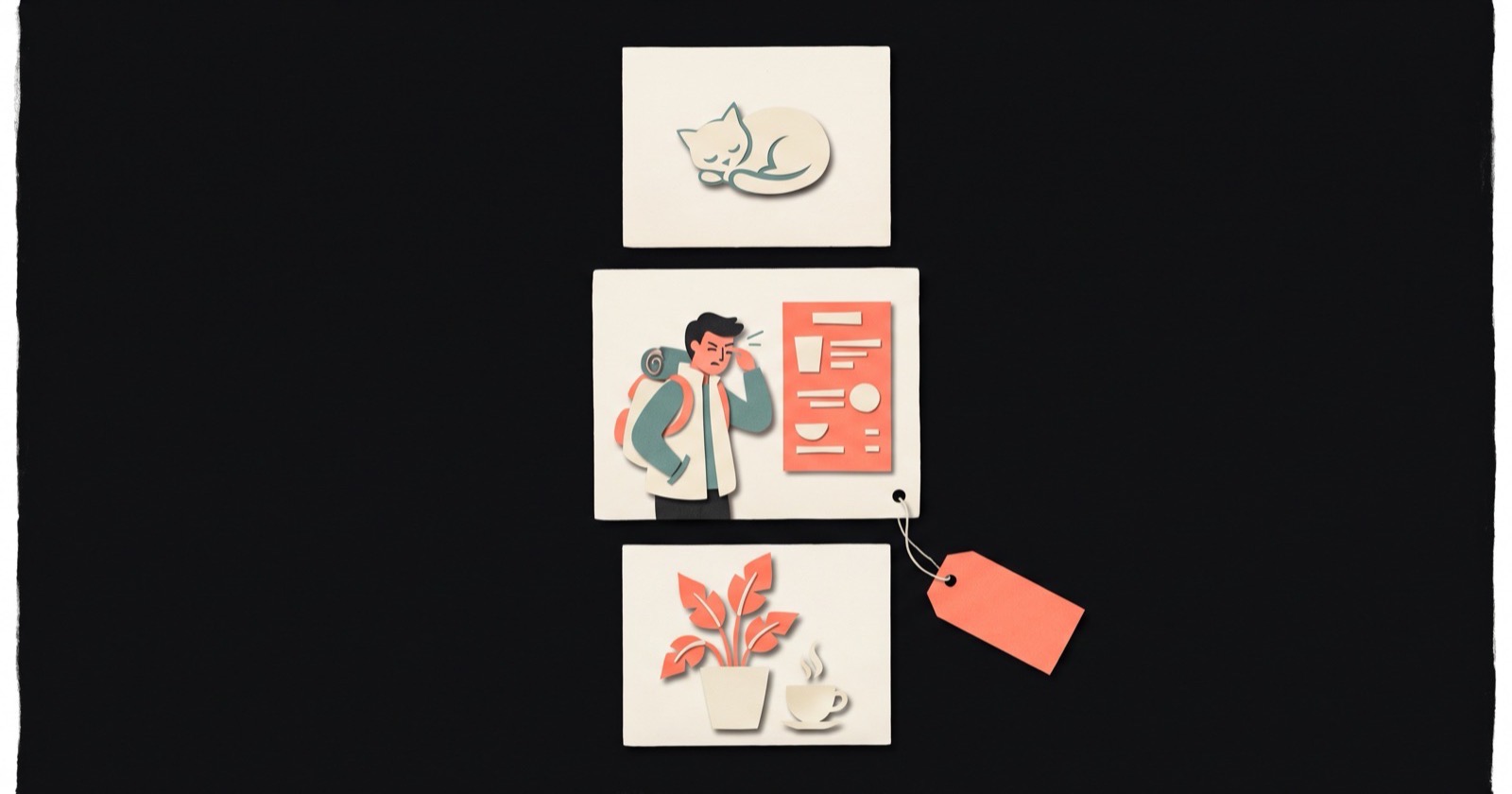
Ads that don't look like ads are native ads: paid posts made in the same shape as the content around them. On TikTok, Reels and Shorts the common version is the UGC ad (user-generated content style), where a person talks to the camera, tries something or explains something, the way creators do in unpaid posts. They get watched because people skip anything that looks like an ad before it has said anything.
A logo in the first frame, a music swell, a voice pitched like a radio spot, and the thumb moves on. Web designers named this habit banner blindness years ago: people learn the shape of an ad and stop looking at anything that has that shape. Feeds trained the same reflex for video.
Ads that take the shape of the feed get the same few seconds of attention as everything else. After that, they have to be worth watching. That is different from hiding that it's an ad. Platforms require a paid-partnership or sponsored label on paid posts, and you should use it. The aim is an ad people would watch even with the label on.
Why native and UGC-style ads work
- The first seconds pay off on their own. The viewer gets something useful or interesting before any product appears, so there's no early reason to leave.
- The product arrives as an answer. By the time it shows up, the viewer has already agreed they have the problem.
- They sound like a person. Normal speed, normal words, the occasional pause.
Five UGC ad formats, one product
To show the range, here is one made-up product done five ways: a language app with short phrase packs for travellers.
- The problem rant. "I've been to Tokyo three times and I still point at menus." The app appears around the 15-second mark as the thing that finally fixed it.
- The how-to. "Five phrases that get you through any restaurant in Japan." The video teaches four of them outright. The fifth comes with a mention of the app the phrases are from.
- The "I tried it". "I gave myself seven days to learn enough Japanese to order dinner. Day one." Each day is a scene; the app is the tool, never the topic.
- The comparison. "Phrasebook, app, or pointing: I tried all three at the same ramen shop." The app wins on screen, so you never have to say so.
- The explainer. "Why 'sumimasen' is the most useful word in Tokyo." It means excuse me, sorry and thank you, depending on the moment. The app shows up as the place you learn the next nine.
Each one would work as a post with no product in it at all. That's the test for this kind of ad: remove the product and ask whether anyone would still watch. The hook in each carries most of the weight; see ten video hook examples for more shapes.
How to make animated ads that don't look like ads
Animation lets you make these without filming anything, and a clear illustrated or handmade style reads as content rather than a commercial:
Paper cut-out, felt puppets and claymation: three styles from the ThreeCut homepage examples.
Animated ads have their own giveaways, though. The habits that keep one looking like content:
- Animate the idea, not the logo. The first frame shows the problem (a traveller squinting at a menu), not the brand.
- One moving thing per beat. If the text, the character and the background all move at once, nothing reads.
- Save the biggest motion for the turn. The moment the product enters is where you cut harder, zoom or change colour. Everything before it can stay calm, so the change stands out.
- Caption every word, in time with the voice. Many people scroll with the sound off. Captions that light up word by word keep them following the story.
- Prefer a clear illustrated style to near-real footage. Illustration reads as a choice. Almost-real AI footage invites "is this fake?" comments, which pull attention away from the message (more in the uncanny valley in AI video).
- Keep text in the safe area. On vertical video, the platform's buttons and captions cover the bottom and right edge. Keep your words in the middle.
- Make the first frame work as a still. It doubles as the thumbnail and decides the first half-second.
- Say the product name once, near the end, with a reason to tap.
A 30-second animated ad script
| Time | Say | Show |
|---|---|---|
| 0–3s | "I've been to Tokyo three times and I still point at menus." | Illustrated traveller at a counter, finger hovering over a menu |
| 3–10s | "Last trip I ordered raw horse by accident. It was fine. I'd still like to choose." | The wrong dish arriving, traveller shrugging |
| 10–20s | "So before this trip I learned fifty phrases in an app, ten minutes a day on the train." | Phone screen, one phrase card, a train window |
| 20–27s | "'Kore wa nan desu ka?' What is this? It changed every meal." | Traveller asking, the cook pointing and smiling |
| 27–30s | "It's called [app]. The first trip pack is free." | App name, one button |
The product doesn't appear until the 10-second mark and isn't named until the last three. Everything before that is a small story about a problem anyone who has travelled will recognise.
Common questions
What are UGC ads?
UGC ads are paid ads made in the style of user-generated content: a person talking to their phone camera, reviewing, trying or explaining something in a casual way. They're made by creators or customers, or in that style by the brand, and run as sponsored posts on TikTok, Instagram, YouTube and Facebook.
What is the difference between native ads and UGC ads?
Native ads are any paid content that matches the format of the platform it runs on, such as a sponsored article on a news site or a promoted post in a feed. UGC ads are one kind of native ad for social video, made to look like a creator's post rather than a brand commercial.
Do animated ads work on TikTok and Reels?
They can, when they behave like content: a clear story in the first seconds, one moving element per beat, word-by-word captions, and the product late. Animation is also faster to change than live footage, which helps when you test several hooks for the same ad.
Do I need to label native ads?
Yes. Platforms and advertising rules in most countries require paid posts to be labelled, for example with the platform's paid-partnership or sponsored tag. A native ad matches the feed's format; it shouldn't hide that it's paid.
ThreeCut's Faceless animation format makes this kind of ad from a script: an AI narrator, illustrated scenes and captions that follow every word, in 9:16 for Reels, TikTok and Shorts. Write the problem first and keep the product for the last third.